Silicone vs. Plastic Baby Feeding Sets
A practical comparison of silicone and plastic baby feeding sets, including durability, cleaning, cost, and what labels are worth checking.
Updated July 13, 2026
Affiliate disclosure: This post contains Amazon affiliate links. If you buy through them, we may earn a commission at no extra cost to you. See our full disclosure policy.
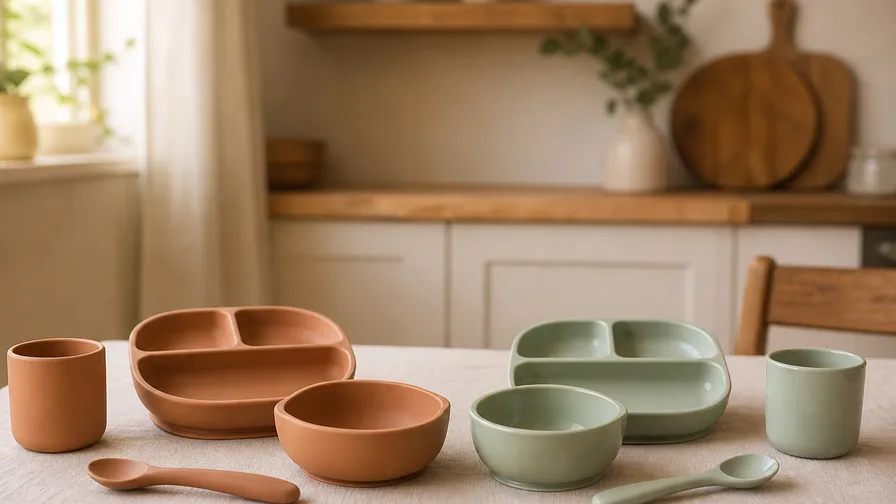
Parents shopping for baby bowls, plates, spoons, and bibs usually run into the same two materials first: silicone and plastic. Both can work. The right choice depends less on the label and more on how you wash dishes, how rough your toddler is with mealtime gear, and whether you care more about price or long-term feel.
This is a practical comparison, not a purity contest.
Quick answer
Choose silicone if you want soft, grippy feeding pieces that can usually handle the dishwasher and daily toddler abuse. It is often nicer for bibs, suction bowls, and first spoons.
Choose plastic if you want lightweight, inexpensive pieces that are easy to replace and stack neatly in a cabinet. It is often simpler for daycare backups, travel, and families who lose lids constantly.
The best setup for many households is mixed: silicone for the pieces that touch hot food or get dropped daily, and plastic for backup containers, snack cups, and spare plates.
Where silicone does better
Silicone feels more substantial than thin plastic. A good silicone bowl or plate does not slide around as much, and suction bases can help during the early self-feeding stage. Silicone bibs with a front pocket are also easy to rinse after messy meals.
Silicone is usually flexible, which helps when it gets tossed into a diaper bag or crowded dishwasher rack. It also tends to stay quieter on the table than hard plastic.
The downsides are real. Silicone can hold onto strong smells from tomato sauce, dish soap, or garlic-heavy foods. Some pieces also attract lint in drawers. Cheap silicone can feel floppy, especially in plates that are supposed to hold a full toddler meal.
Where plastic does better
Plastic feeding gear is cheap, light, and easy to find. If you need six plates for daycare rotation or a stack of snack containers for the car, plastic keeps the cost down.
Plastic also dries quickly and stacks well. That sounds boring until you are trying to clear a sink at 9 p.m.
The trade-off is wear. Plastic can scratch, stain, warp in the dishwasher, or look cloudy after months of use. Very lightweight plates slide around more easily. Thin plastic utensils can bend in frustrating ways once a toddler starts using them hard.
Labels worth checking
For plastic, look for specific claims instead of vague marketing language:
- BPA-free
- phthalate-free
- dishwasher-safe, if you plan to use the dishwasher
- microwave-safe, only if you actually intend to microwave it
- top-rack dishwasher guidance
For silicone, look for:
- food-grade silicone
- dishwasher-safe
- temperature range, if listed
- no added fragrance
- one-piece construction where possible, especially for spoons or bib pockets
Skip products that lean on broad fear language without naming the actual material, certification, or safety claim.
Cleaning and smell control
Silicone and plastic both need normal soap-and-water cleaning. The difference is what happens over time.
Silicone can pick up soap smell if washed with heavily scented detergent. If that bothers you, try an unscented dish soap and let pieces dry fully before stacking them.
Plastic is less likely to hold soap smell, but more likely to stain from tomato sauce, turmeric, or oily foods. Once plastic is deeply scratched, it can also look permanently tired even when it is clean.
Dishwasher reality
If you run the dishwasher daily, check the care instructions before buying a full set. Some plastic feeding pieces are top-rack only. Some lids warp if they sit near heating elements. Silicone usually handles dishwashers well, but thin suction plates can flip over and collect water.
For busy families, dishwasher-safe matters more than almost any lifestyle claim.
Cost and replacement
Plastic wins on price. If you are building a daycare stash, keeping extras in grandparents’ cabinets, or buying backup snack cups, plastic is hard to beat.
Silicone costs more, but the better pieces often feel nicer longer. A sturdy silicone bib or suction bowl can outlast several cheaper versions if it does not absorb odors that bother you.
Helpful search links
These are broad Amazon search links rather than specific ASIN recommendations. They are here for the pieces that naturally fit this comparison, not because every feeding item needs to match.
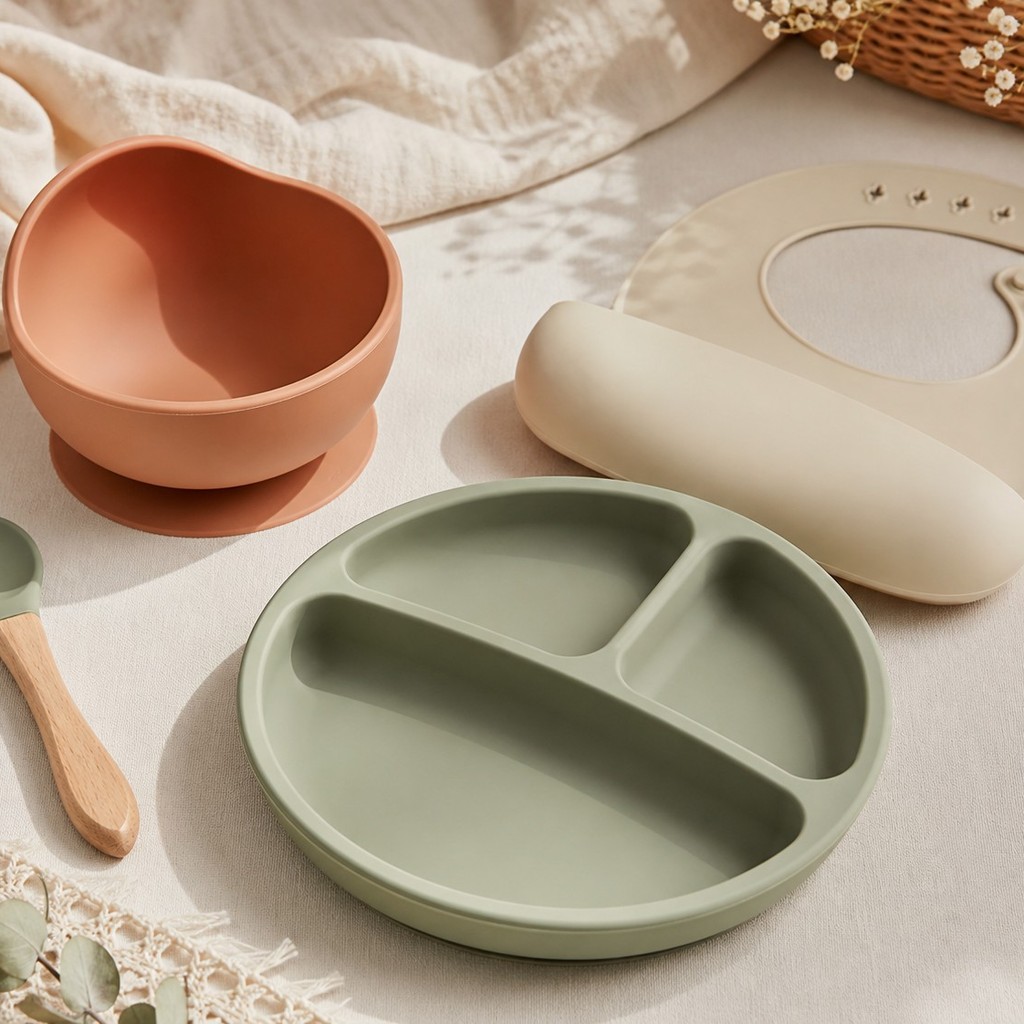
#1. Silicone Baby Feeding Set
$15–$30
Pros
- Good fit for suction bowls, soft spoons, and bibs
- Usually dishwasher-friendly and durable for toddler use
Cons
- Can hold onto soap or food smells if washed with scented detergent
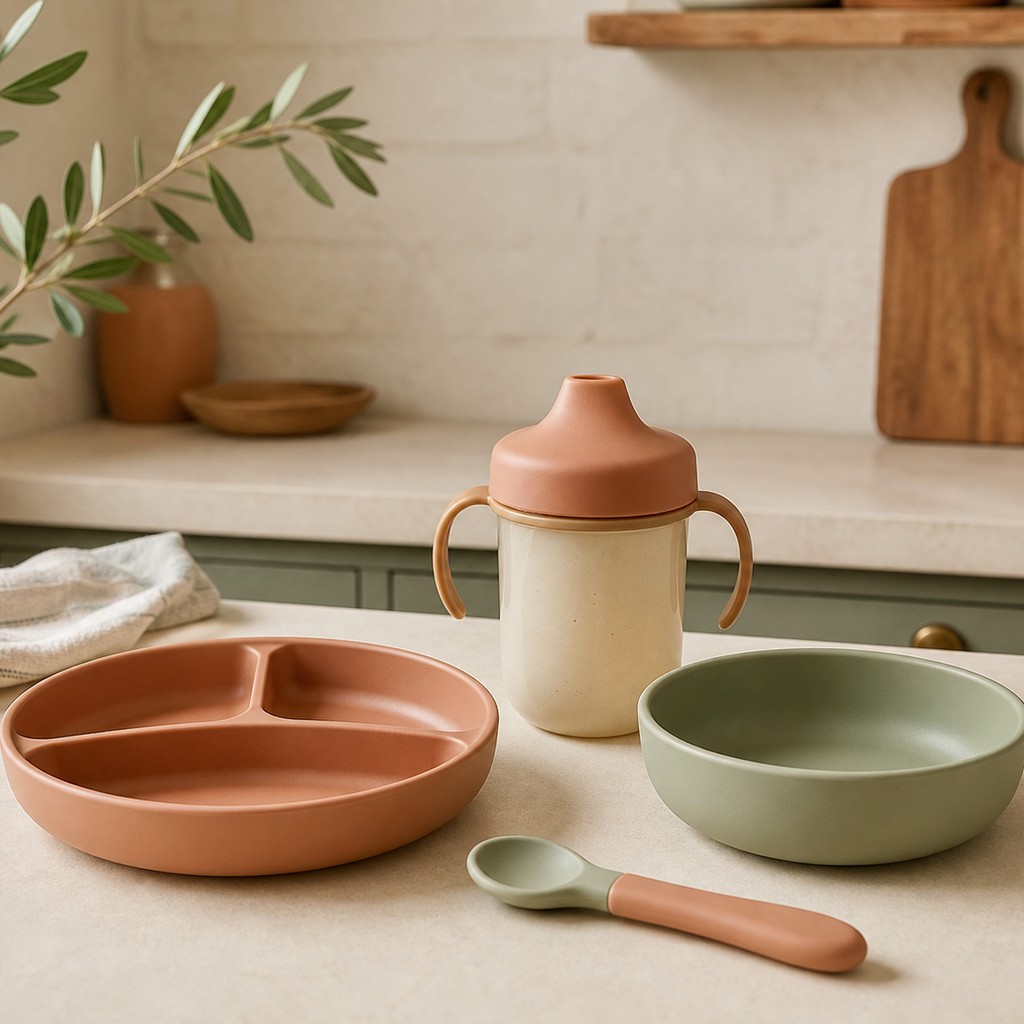
#2. BPA-Free Plastic Baby Feeding Set
$10–$25
Pros
- Lightweight and inexpensive for daycare or backup pieces
- Stacks easily and is simple to replace
Cons
- Can scratch, stain, or warp faster than sturdier materials
What I would buy first
Start with a small mixed setup:
- one silicone suction bowl or plate for early self-feeding
- one silicone bib with a catch pocket
- a few inexpensive plastic plates or snack containers for backup
- stainless or silicone-tipped spoons, depending on your child’s stage
Use those for a few weeks before buying matching sets. Feeding gear is personal to your kitchen routine, and the prettiest set is not always the one you reach for daily.
Once your toddler is feeding themselves consistently, our toddler utensil set guide covers grip styles and materials in more depth.
Bottom line
Silicone feels better for messy, repeated use. Plastic is cheaper and easier to replace. Neither material automatically makes a product good. Check the care instructions, avoid vague claims, and buy the pieces that match how your family actually eats and washes dishes.
The Hippie Mom Blog Team
We research every product roundup against published certifications and specs, not marketing copy. Read more about how we choose products.
Related articles
Baby Food Makers vs. Simple Kitchen Tools
A practical comparison of baby food makers, steamers, blenders, and simple kitchen tools for parents making baby food at home.
Choosing a Bottle Drying Rack
A practical guide to bottle drying racks, including capacity, footprint, and material options for daily bottle-washing routines.
Choosing a Bottle Sterilizer: Steam vs. UV vs. Boiling
A practical comparison of bottle sterilizing methods — steam, UV, and boiling — including speed, cost, and what's actually necessary.