Choosing a Toddler Utensil Set for Independent Eating
A practical guide to toddler utensil sets, including grip design, material, and how to match utensils to your child's feeding stage.
Affiliate disclosure: This post contains Amazon affiliate links. If you buy through them, we may earn a commission at no extra cost to you. See our full disclosure policy.
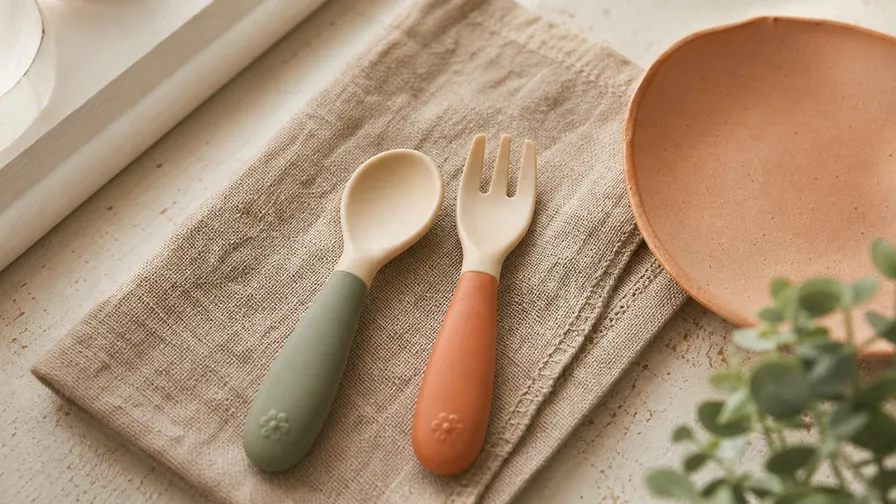
Toddler utensils exist in a lot of shapes because grip development changes fast between the first-spoon stage and confident independent eating.
Grip styles
- Bent-handle or angled utensils: designed to make scooping easier for a beginner grip, often recommended for the earliest self-feeding stage.
- Straight, chunky-handled utensils: closer to adult utensils but sized and weighted for smaller hands, useful once basic scooping is established.
- Training chopsticks or specialty utensils: for older toddlers and preschoolers working on more advanced grip skills.
Material options
- Silicone-tipped utensils: softer on gums and forgiving if dropped, common for the youngest self-feeding stage.
- Stainless steel: more durable long-term and often preferred once a toddler has moved past the mouthing stage, since it doesn’t wear down or stain.
- Bamboo or wood: lightweight and warm to the touch, though check specific care instructions since not all are dishwasher-safe.
Matching utensils to stage
- Just starting self-feeding: short, chunky-handled utensils with a soft tip.
- Getting more coordinated: bent-handle utensils that support proper wrist angle.
- Confident eater: transition toward straight-handled or stainless utensils closer to adult design.
What to check before buying
- Dishwasher-safe status, if that matters to your routine
- Handle size relative to your child’s current hand size, not just their age in months
- Tip material (silicone vs. metal) based on your child’s current teeth and gum stage
- Set completeness — some sets include a fork, spoon, and sometimes a training knife
Helpful search link
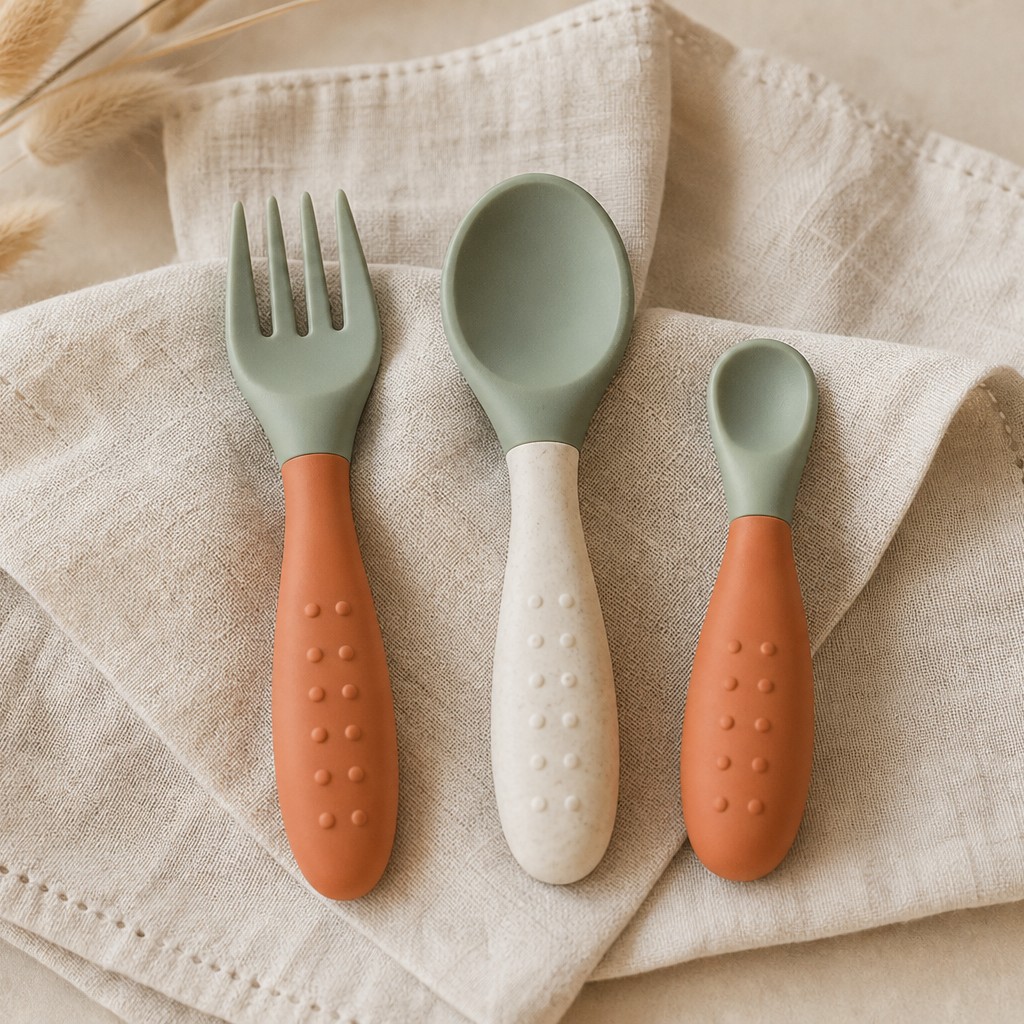
Look for short handles, rounded edges, and enough scoop/poke function to actually help your toddler eat. A cute set that cannot pick up food will just become a toy at the table.
#1. Toddler Utensil Set
$8–$20
Pros
- Sized for small hands learning independent eating
- Usually inexpensive enough to keep backups
Cons
- Some sets are too blunt to pick up food effectively
What makes toddler utensils actually useful
Toddler utensils need to be small enough for a toddler hand but functional enough to move real food. Very rounded forks can be safe but useless for pasta, fruit, or soft vegetables. Very deep spoons can hold food but may be awkward for smaller mouths. The sweet spot is a short handle, rounded edges, and just enough shape to scoop or poke food effectively.
Grip matters more than matching the rest of the dinnerware. A slightly thicker handle is easier for many toddlers to control than a skinny adult-style utensil. Silicone handles can help with grip, but the eating end still needs to perform.
Material choices
Stainless steel tips usually work better for actual eating, especially once a toddler is past the early self-feeding stage. Silicone-tipped utensils are gentler for younger babies but can feel too flexible for older toddlers. Plastic sets are lightweight and inexpensive, but cheap plastic can bend and wear quickly.
If your toddler is frustrated at meals, the utensil may be part of the problem. A fork that cannot pick up food turns practice into play.
How many sets to buy
Two or three daily sets are enough for most households. More than that usually means more pieces scattered across drawers, bags, and the car. If you need daycare utensils, buy a duplicate of the set your child already handles well rather than a completely different design.
Bottom line
There’s no single “best” utensil — grip style and material should match your toddler’s current feeding stage. Expect to size up or swap styles a few times as coordination develops, rather than buying one set meant to last through every stage.
The Hippie Mom Blog Team
We research every product roundup against published certifications and specs, not marketing copy. Read more about how we choose products.
Related articles
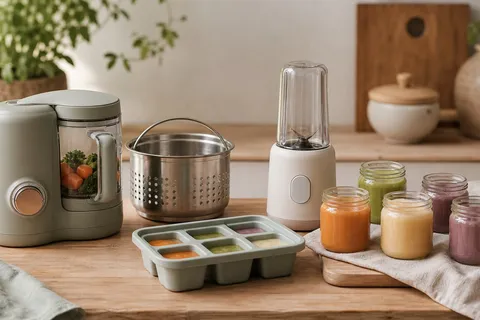
Baby Food Makers vs. Simple Kitchen Tools
A practical comparison of baby food makers, steamers, blenders, and simple kitchen tools for parents making baby food at home.
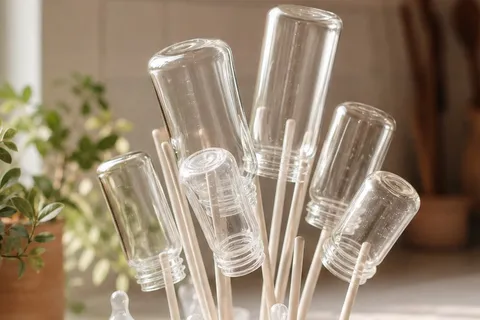
Choosing a Bottle Drying Rack
A practical guide to bottle drying racks, including capacity, footprint, and material options for daily bottle-washing routines.
Choosing a Bottle Sterilizer: Steam vs. UV vs. Boiling
A practical comparison of bottle sterilizing methods — steam, UV, and boiling — including speed, cost, and what's actually necessary.