Crib Sheet Fabric Guide: Cotton, Bamboo, Muslin
Compare cotton, organic cotton, muslin, jersey, and bamboo viscose crib sheets for fit, washing, shrinkage, texture, and everyday nursery use.
Updated August 1, 2026
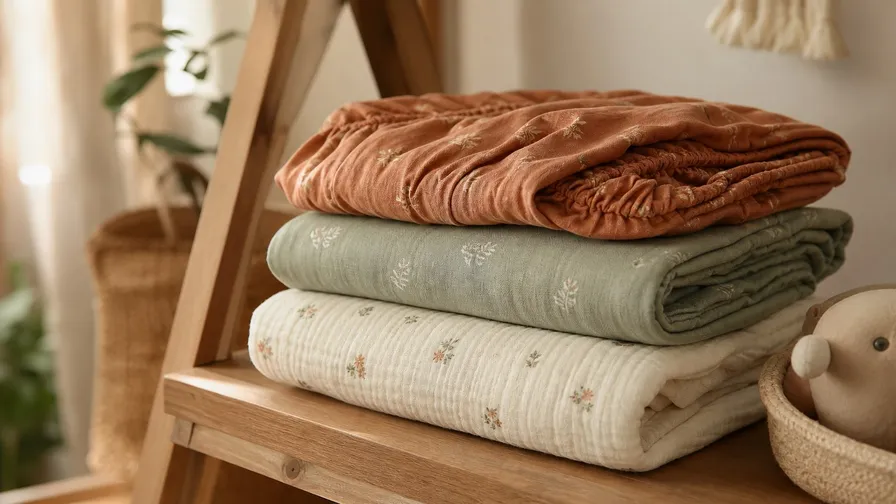
Affiliate disclosure: This post contains Amazon affiliate links. If you buy through them, we may earn a commission at no extra cost to you. See our full disclosure policy.
Crib sheets seem simple until you start comparing cotton, organic cotton, muslin, bamboo viscose, jersey knit, percale, and a dozen soft-sounding product names. The good news: you do not need a drawer full of specialty sheets.
You need sheets that fit tightly, wash well, feel comfortable, and hold up after repeated laundry.
The most important rule: fit first
A crib sheet should fit the mattress snugly. Fabric type does not matter if the sheet is loose, bunchy, or difficult to secure.
Before buying, check:
- crib mattress dimensions
- sheet pocket depth
- elastic quality
- care instructions
- return policy, especially for thicker mattresses
A smooth, tight fit is the baseline.
Cotton crib sheets
Cotton is the practical default. It is breathable, widely available, easy to wash, and usually affordable.
Standard cotton sheets vary a lot. Some feel crisp, some feel thin, and some get softer over time. If you want a straightforward sheet that can handle frequent washing, cotton is a safe place to start.
Look for clear details such as cotton type, weave, and whether the sheet is pre-shrunk.
Organic cotton crib sheets
Organic cotton can be a good upgrade for families who care about farming standards and want a fabric that is easy to understand. It is still cotton, so the feel depends on weave and construction.
Useful labels include:
- GOTS certified organic cotton
- OEKO-TEX certified fabric
- clearly stated cotton percentage
A sheet can be organic and still feel rough or shrink poorly. Certification helps, but reviews and care instructions still matter.
Muslin crib sheets
Muslin is light, airy, and softens with washing. It can be nice in warm rooms or for parents who already like muslin swaddles.
The trade-off is texture. Muslin has a more open, crinkled feel than smooth cotton percale. Some families love that. Others prefer a tighter, smoother sheet.
Muslin can also snag more easily if washed with zippers, hooks, or rough laundry.
Jersey knit crib sheets
Jersey feels like a soft T-shirt. It stretches easily, which can make it simple to put on the mattress.
That stretch is also the thing to watch. A good jersey sheet should still fit snugly and recover its shape after washing. Thin jersey can stretch out or look tired faster than woven cotton.
Jersey is a comfort choice, not automatically a better material.
Bamboo viscose crib sheets
Many “bamboo” crib sheets are bamboo viscose, rayon from bamboo, or a blend. They often feel very soft and smooth. Parents who like silky fabrics may prefer them.
The label matters here. Look for the exact fiber name, not just a bamboo leaf graphic. Also check washing instructions, because some very soft sheets need gentler care than basic cotton.
Bamboo viscose can be comfortable, but it is not magic. Buy it because you like the feel and care routine, not because of broad eco claims.
How many crib sheets do you need?
For most families, three fitted crib sheets is a practical starting point:
- one on the mattress
- one clean backup
- one in the laundry
If you have frequent leaks, reflux, daycare naps, or limited laundry days, four or five may be more realistic.
What certifications help?
Certifications are most useful when they answer a specific question.
- GOTS: helpful for organic textile standards.
- OEKO-TEX Standard 100: helpful for testing finished textile products for certain substances.
- GREENGUARD Gold: more common for furniture and mattresses than sheets.
Do not assume a product is better because it has a long paragraph of vague claims. Look for the actual certification name.
Washing tips
Wash crib sheets before first use. After that, follow the care label and avoid overcomplicating it.
Helpful habits:
- wash sheets with similar fabrics
- close zippers on other laundry before mixing
- avoid overloading the washer
- dry on the recommended setting
- rotate sheets so one favorite does not wear out first
How the fabrics compare after repeated washing
The first wash is where an almost-right sheet can become a frustrating one. Cotton and muslin may shrink, jersey can relax, and very soft viscose blends may need lower heat. Measure fit after washing before buying several more of the same sheet.
| Fabric | Typical feel | Laundry trade-off | What to watch |
|---|---|---|---|
| Cotton percale | Smooth and crisp | Handles frequent washing well | Shrinkage if dried too hot |
| Organic cotton | Depends on weave | Similar care to conventional cotton | Certification does not guarantee softness |
| Muslin | Airy and textured | Softens over time | Snags and open-weave wear |
| Jersey knit | Stretchy and soft | Easy to pull over corners | Can stretch out or pill |
| Bamboo viscose | Smooth and silky | Often prefers gentler heat | Fiber label and care restrictions |
A practical crib-sheet cleaning routine
Keep the routine simple enough to repeat during a messy week:
- Remove solid debris before the sheet enters the washer.
- Treat visible stains according to the fabric’s care label.
- Wash with similar colors and fabrics.
- Use the recommended water temperature rather than assuming hotter is always better.
- Dry completely before folding to prevent a musty smell.
- Put the clean sheet back on the mattress and check that every corner remains snug.
Avoid washing muslin with open zippers, hook-and-loop tabs, or rough hardware. For jersey, do not stretch the elastic while the sheet is hot from the dryer. For viscose blends, follow the lower-heat instructions even if the rest of the nursery laundry uses a hotter cycle.
When to replace a crib sheet
Replace a sheet when the elastic no longer keeps it tight, a seam opens, the fabric develops a hole, or the fitted pocket no longer stays under the mattress. Cosmetic fading is not the same as a fit problem. A faded but snug sheet can remain useful; a beautiful loose sheet cannot.
Before passing sheets to another family, check the elastic and confirm the mattress dimensions match. “Standard crib size” listings can still differ in pocket depth and fabric stretch.
Helpful search link
A GOTS-certified organic cotton sheet is a straightforward starting point if certification is what you’re specifically shopping for.
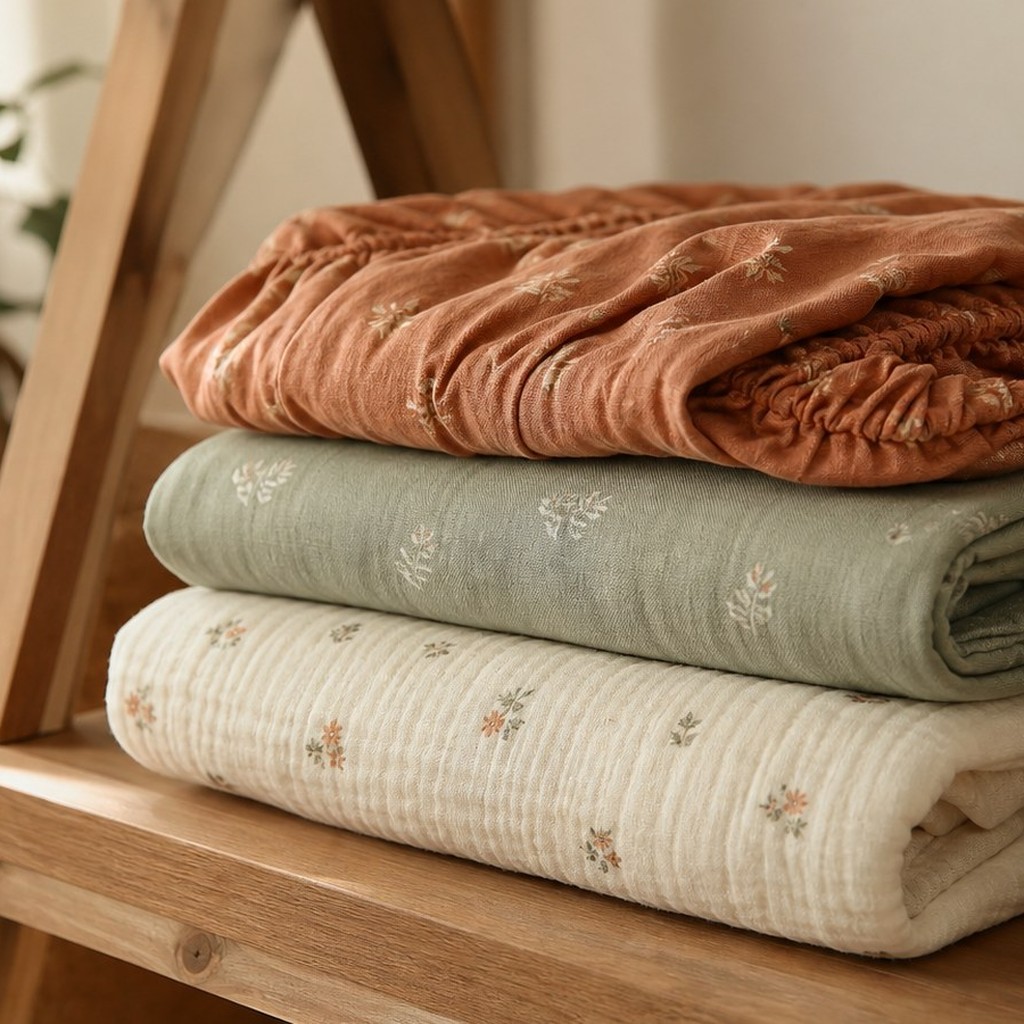
#1. GOTS-Certified Organic Cotton Crib Sheet
$15–$30
Pros
- GOTS certification named specifically on the listing
- Deep pocket fits thicker mattresses without bunching
Cons
- Feel and softness still vary by weave, so check reviews
If you’re outfitting the rest of the crib at the same time, our guide to choosing a non-toxic crib mattress covers the same certifications for the mattress itself.
Bottom line
Cotton is the easiest default. Organic cotton is a good upgrade when the certification and feel make sense. Muslin is airy, jersey is stretchy, and bamboo viscose is soft but label-dependent. Buy for fit, washability, and clear fabric details first.
The Hippie Mom Blog Team
We research every product roundup against published certifications and specs, not marketing copy. Read more about how we choose products.
Related articles

Convertible Baby Gear: What Is Actually Worth Buying?
A practical guide to convertible cribs, dresser-changing stations, high chairs, strollers, and when a multi-stage product saves money—or adds clutter.

Nursery Drawer Organization That Survives the First Year
A practical nursery dresser setup using simple zones, drawer dividers, size rotation, refill limits, and storage that changes as your baby grows.
Baby Hair Products: What's Actually Useful and What to Skip
A practical guide to baby hair care basics — shampoo, detangler, and soft brushes — without medical or scalp-condition claims.