White Noise Machines: What Actually Matters
How to choose, place, clean, and maintain a nursery white noise machine, including volume controls, timers, cords, portability, and nightlight trade-offs.
Updated August 1, 2026
Affiliate disclosure: This post contains Amazon affiliate links. If you buy through them, we may earn a commission at no extra cost to you. See our full disclosure policy.
A white noise machine can soften sudden household sounds and make the nursery sound more consistent. It does not need dozens of tracks or an app subscription to do that job well. The most useful features are predictable controls, a wide volume range, sensible placement, and a housing you can keep clean.
Start with the room, not the feature list
Notice which sounds are actually disruptive. A nursery near a kitchen may need steady background sound during cleanup. A room facing a street may benefit from a machine placed between the crib and the window. A quiet interior bedroom may need only a low setting during naps.
The machine should support the routine without becoming the routine. If it disconnects from Wi-Fi, the app changes, or the power flickers, you should still be able to turn it on and adjust the volume from the device.
Sound choices that matter
White noise contains a broad range of frequencies and can sound hissy. Pink or brown noise emphasizes lower frequencies and may sound softer to adults. Fan sounds are another simple option. The label matters less than whether the sound loops smoothly and remains comfortable at a moderate setting.
Listen for a noticeable click, pause, or volume jump at the end of a track. Short loops can become more distracting than the sounds they are meant to cover. A non-looping electronic noise or a long recording without an obvious break is easier to ignore.
Volume controls and placement
Choose a machine with several volume steps rather than only quiet, medium, and loud. Start low. Place the unit away from the crib instead of beside a baby’s head, and follow current pediatric guidance for sound level and placement if you need a specific limit.
Good placement also means:
- cords are secured and completely out of reach
- the unit sits on a stable surface
- air vents are not covered by blankets or curtains
- buttons remain reachable for an adult at night
- indicator lights are dim enough for the room
A phone sound-meter app can provide a rough comparison between settings, but it is not a calibrated medical instrument. Use it as a consistency check, not a guarantee.
Timer or continuous play?
A timer works for households that want sound during the settling period but not all night. Continuous play avoids an abrupt change when a short timer ends. Neither mode is automatically right for every family.
Check whether the machine remembers the last volume after power is disconnected. Memory is convenient for night wakings, but verify the saved setting periodically so it does not drift louder after someone uses it in another room.
Portable versus plug-in machines
A plug-in nursery unit is harder to lose and does not need charging. A portable machine can move to the stroller, hotel, or grandparent’s house, but battery condition becomes part of the routine.
For rechargeable models, check:
- whether it works while charging
- the type of charging cable
- battery indicator visibility
- automatic shutoff behavior
- whether the battery is replaceable
Do not leave a charging cable routed near the crib. Store travel clips and short cords with the machine rather than loose in the sleep area.
Nightlight combinations
A combined nightlight and sound machine saves outlet and shelf space. It also means replacing both functions if one fails. Check whether the light and sound can be controlled separately, whether the light turns on unexpectedly after a power outage, and whether the lowest light setting is actually dim.
Parents who already have a nursery nightlight may prefer a simpler sound-only machine. Our nursery nightlight guide covers color temperature and controls separately.
How to clean a white noise machine safely
Unplug the machine before cleaning. Wipe the exterior with a barely damp cloth and dry it before reconnecting power. Do not spray cleaner into speaker holes, charging ports, seams, or vents.
A practical monthly check:
- Dust speaker openings and vents with a dry soft brush.
- Wipe buttons and the base where dust collects.
- Inspect the power cord for pinching or fraying.
- Confirm the plug fits securely.
- Test the lowest and usual volume settings.
- Check portable batteries for swelling, overheating, or a sharp drop in runtime.
Follow the manufacturer’s instructions if the housing uses a special finish. Avoid submerging the unit or using disinfecting wipes that leave liquid around the controls unless the maker specifically allows them.
Travel and storage
Use a small pouch so cables do not scratch the speaker or disappear in luggage. Before a trip, charge the unit, download any required sounds, and test whether it works without Wi-Fi. In a hotel, keep it away from sinks, heating units, and reachable cords.
If the machine will sit unused, clean it, charge or discharge the battery according to the manufacturer’s storage guidance, and keep it in a dry cabinet rather than a humid bathroom closet.
Helpful search link
This broad comparison link is useful for checking timers, physical controls, portable batteries, and review patterns without pretending one model fits every nursery.
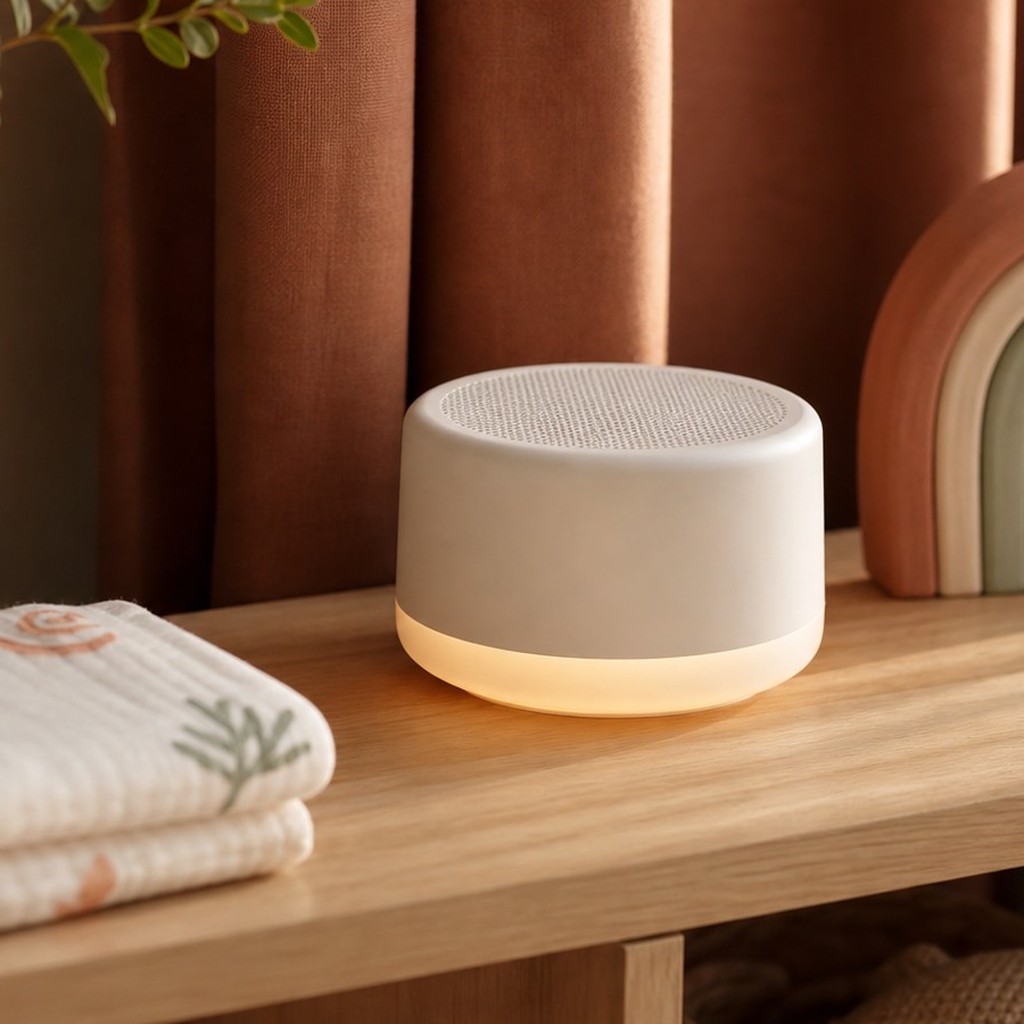
#1. Nursery White Noise Machine
$20–$60
Pros
- Adjustable volume and timer options make it easier to fit different routines
- A simple dedicated unit does not require leaving a phone in the nursery
Cons
- Combined app, subscription, and nightlight features can add complexity
What to skip
Skip a subscription if the only feature you need is steady noise. Be cautious with products that hide basic controls inside an app, use unusually bright status lights, or provide no clear cleaning instructions. Bundled stories, wake-up routines, and color programs can be useful later, but they are not required for a newborn sleep setup.
Bottom line
Choose a white noise machine with smooth sound, fine volume control, physical buttons, safe cord placement, and a surface you can wipe clean. Put it away from the crib, start low, inspect it monthly, and use only the features that make the room easier to manage.
Frequently asked questions
How loud should a white noise machine be?+
Sound machines are generally recommended to be placed away from the crib and kept at a moderate volume rather than directly next to a sleeping baby's head. Check current pediatric guidance on safe sound levels if you have specific concerns.
Do white noise machines need to run all night?+
That's a household preference — some run continuously through naps and overnight sleep, others use it only to help with the initial fall-asleep period.
The Hippie Mom Blog Team
We research every product roundup against published certifications and specs, not marketing copy. Read more about how we choose products.
Related articles

Convertible Baby Gear: What Is Actually Worth Buying?
A practical guide to convertible cribs, dresser-changing stations, high chairs, strollers, and when a multi-stage product saves money—or adds clutter.

Nursery Drawer Organization That Survives the First Year
A practical nursery dresser setup using simple zones, drawer dividers, size rotation, refill limits, and storage that changes as your baby grows.
Baby Hair Products: What's Actually Useful and What to Skip
A practical guide to baby hair care basics — shampoo, detangler, and soft brushes — without medical or scalp-condition claims.